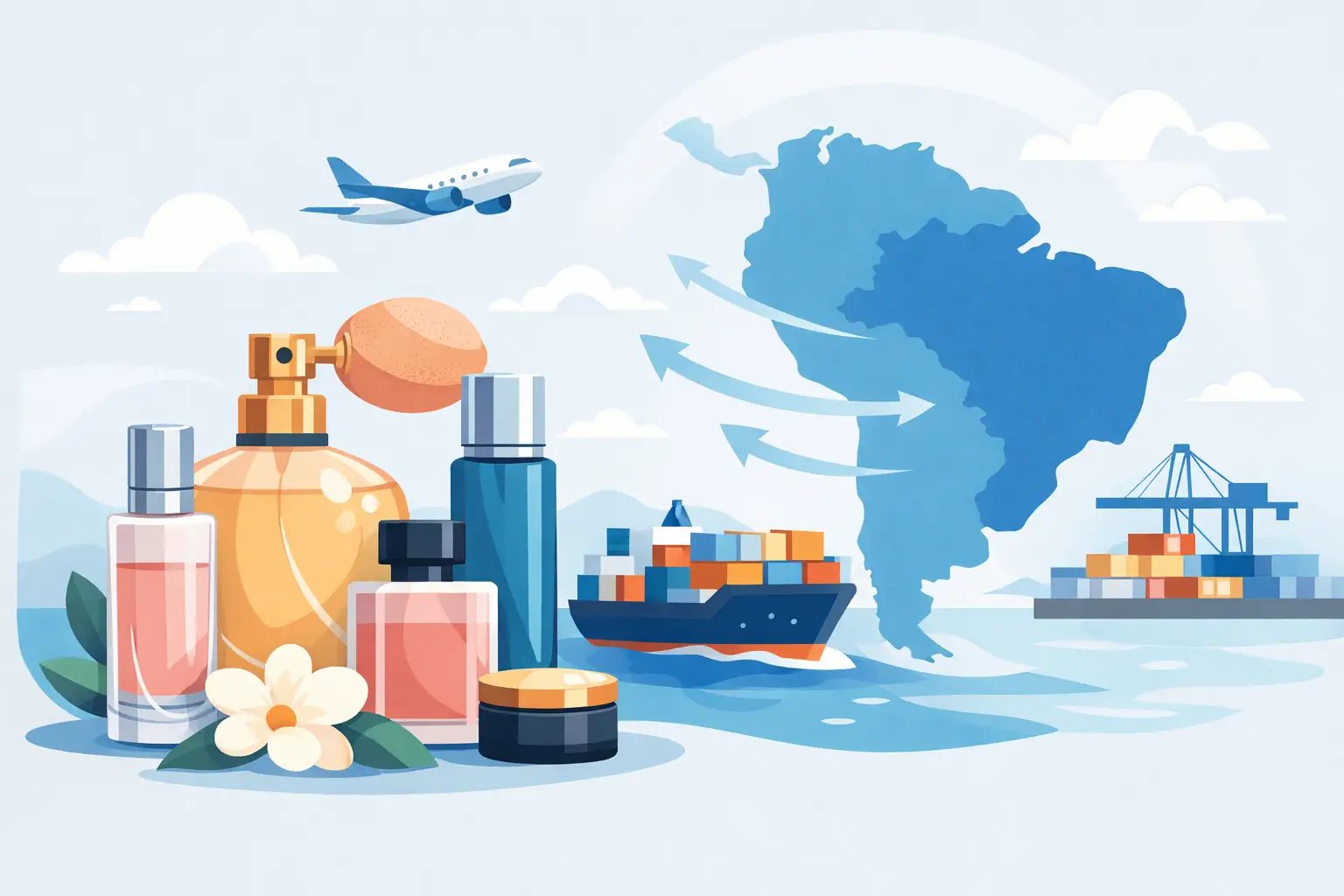
A missed document can hold a fragrance shipment for weeks. In beauty retail, that delay does more than slow delivery – it interrupts launches, ties up cash, and leaves shelf space unproductive. That is why understanding how to import wholesale perfumes to South America matters for any retailer or distributor planning to scale this category with confidence.
Perfume is a high-potential product line, but it is also a regulated one. Most fragrances are alcohol-based, which changes how they are classified, packed, labeled, and transported. South America adds another layer: each market has its own customs rules, tax structure, product registration standards, and import practices. If you want to protect margins and maintain reliable inventory flow, you need a shipping plan built for commercial reality, not guesswork.
How to Import Wholesale Perfumes to South America Without Costly Delays
The first decision is not shipping mode. It is market selection. Importing into Chile is not the same as importing into Brazil, Colombia, or Peru. Some countries are more operationally straightforward, while others require more documentation, product approvals, or local representation. Before placing a wholesale order, define exactly where the goods will clear customs and who the importer of record will be.
That point matters because the importer of record is legally responsible for compliance, duties, and documentation accuracy. If you are a retailer buying directly, that may be your company. If you are working through a local distributor, it may be theirs. This affects everything from labeling to tax exposure. Strong operators settle this before the first shipment leaves the warehouse.
You also need to confirm whether the perfumes require product notification, sanitary registration, or any cosmetics-specific approval in the destination country. Some South American markets treat fragrance imports under broader cosmetics frameworks, while others apply stricter review. The practical lesson is simple: do not assume that a product accepted in one country can enter another under the same paperwork.
Know the Product Classification Before You Ship
Perfumes are not routine dry goods. Because many contain ethyl alcohol, they are often treated as dangerous goods for transport purposes. That changes freight options, packaging specifications, documentation requirements, and sometimes carrier availability.
In practice, your shipping team or freight forwarder will need the correct product data, including the safety data sheet, UN classification if applicable, net quantity per unit, and packaging format. If this information is incomplete or inconsistent with the commercial invoice and packing list, the shipment may be flagged. Buyers focused on margin should pay attention here, because compliance mistakes often create storage fees, reinspection costs, and missed sell-through windows.
Classification also affects whether air freight is commercially viable. Air can be useful for urgent replenishment or premium launches, but dangerous goods surcharges can make smaller shipments disproportionately expensive. Ocean freight is often more cost-efficient for larger wholesale volumes, though transit times are longer and planning discipline becomes more important. There is no single best option. The right choice depends on order size, launch timing, and cash-flow priorities.
Air Freight vs. Ocean Freight for Wholesale Perfumes
Air freight gives you speed and tighter replenishment cycles. If you are testing a new fragrance range or supporting a time-sensitive promotion, that speed can protect revenue. The trade-off is cost, stricter carrier handling rules, and less room for packaging mistakes.
Ocean freight usually works better when you are moving stable, repeat-volume inventory. The landed cost is often more favorable, especially when freight is spread across larger quantities. The trade-off is slower response time. If demand moves faster than expected, a cheap shipment that arrives too late is not really cheap.
Documentation Is Where Imports Often Break Down
For most wholesale perfume shipments, the core document set includes the commercial invoice, packing list, transport document, certificate of origin where relevant, and any regulatory or safety documents required by the destination market. Depending on the country, you may also need product registrations, tax identification details, local importer licenses, or Spanish or Portuguese labeling approvals.
The invoice must be precise. Product descriptions should match the goods, unit values should be realistic and defensible, and quantities must align with the packing list. Vague descriptions such as “cosmetics” can create avoidable customs questions. A cleaner description like “alcohol-based eau de parfum” or “fragrance gift set” is far more useful.
Incoterms deserve attention as well. Many disputes over freight cost, insurance, and customs responsibility happen because buyers treat Incoterms as a formality. They are not. If you buy on EXW, FOB, CIF, or DDP terms, your cost structure and risk exposure change significantly. For new importers, this is one of the most important points in the whole transaction. A lower unit price can become a worse deal if the freight and clearance responsibilities are stacked against you.
Duties, Taxes, and Landed Cost Planning
The real profit question is not your wholesale purchase price. It is your landed cost. That includes product cost, freight, insurance, customs duties, import taxes, broker fees, local handling charges, inland delivery, and any compliance-related expense tied to market entry.
South American markets vary widely on duty rates and tax treatment. Some countries may apply value-added tax, selective consumption taxes, or additional charges depending on product type and declared value. Currency volatility can also shift import economics between order placement and customs clearance. If your pricing model is tight, these changes matter.
The best approach is to calculate landed cost before you commit to the order, not after the goods are already in transit. Experienced buyers build in a margin buffer and pressure-test the shipment against likely customs and logistics scenarios. This gives you a clearer view of whether a fragrance line will remain commercially attractive once it reaches the shelf.
Packaging and Labeling Need to Be Planned Early
Retail-ready perfume packaging does not automatically equal import-ready packaging. The outer cartons may need hazard markings, orientation labels, or specific packing configurations for dangerous goods transport. Inner packaging must protect glass bottles from breakage through long transit cycles, port handling, and domestic delivery.
Labeling is another area where preventable problems appear. Some countries require local-language labeling, ingredient disclosure, importer information, batch traceability, or shelf-life details. Even when a product is genuine and commercially strong, customs can stop it if required labeling is missing or noncompliant.
This is why packaging and market compliance should be discussed with the supplier before production or picking begins. Reliable wholesale partners understand that export success is not just about supplying inventory. It is about preparing inventory so it can actually clear, arrive, and sell.
Choose Suppliers and Logistics Partners That Understand Beauty Distribution
If you are importing fragrances at wholesale scale, supplier quality is only part of the equation. Operational accuracy matters just as much. You need partners who can provide consistent documentation, stable case packing, compliant export preparation, and realistic lead times.
That is where an experienced wholesale distributor can create a strategic advantage. Glamour TEK AG, for example, operates with a clear focus on quality, reliability, and commercially viable beauty supply for global retail markets. For buyers building fragrance assortments, that type of supply partner can reduce friction before a shipment ever reaches customs.
Your freight forwarder and customs broker are equally important. General logistics capability is useful, but fragrance imports benefit from category-specific experience. A team that regularly handles alcohol-based cosmetics will usually spot documentation or classification issues earlier, and early corrections are far cheaper than port-side surprises.
What to Ask Before You Approve the Shipment
Before releasing payment or confirming dispatch, ask four practical questions. Is the product fully compliant for the destination country? Is the dangerous goods classification confirmed? Does the document set match the shipment exactly? And have total landed costs been modeled with current freight and tax assumptions?
These questions are not administrative details. They protect inventory flow and margin quality. In wholesale beauty, small mistakes at origin often become expensive problems at destination.
Build for Repeatability, Not Just One Successful Import
A first shipment that clears customs is good. A repeatable import process is better. If you plan to grow in South America, create standard operating procedures around forecasting, labeling approval, document review, freight booking timelines, and customs coordination.
This helps you move from reactive importing to scalable buying. It also strengthens your negotiating position with suppliers and logistics partners because you become a more predictable customer. Predictability usually leads to better service, fewer exceptions, and stronger stock availability over time.
The fragrance category rewards buyers who move with discipline. When your import process is structured, you can expand assortments faster, replenish winners more confidently, and enter new markets with less operational drag.
South America offers real opportunity for wholesale perfume importers, but opportunity favors preparation. If you treat shipping, compliance, and landed cost as part of your sales strategy rather than back-office tasks, you put your business in a far stronger position to grow with control.