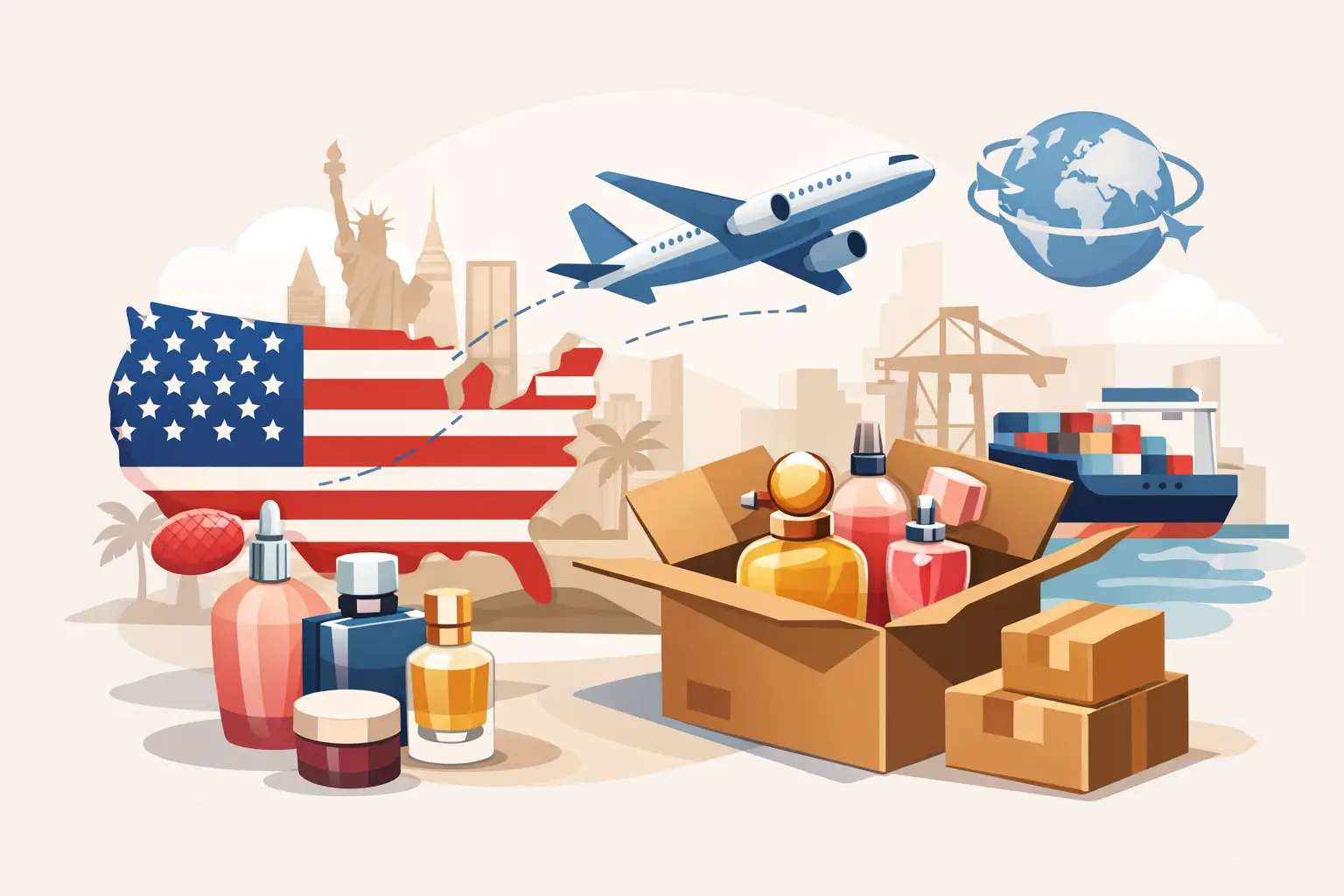
A profitable perfume line can lose its margin fast when one shipment gets held for hazmat review, customs value questions, or labeling issues. That is why understanding cómo importar perfumes de Estados Unidos a Latinoamérica: aduanas y logística is not a back-office detail. For retailers, distributors, and beauty sellers, it is a growth decision that affects landed cost, sell-through timing, and customer trust.
Perfume is not a standard consumer good in cross-border trade. It combines brand sensitivity, regulated ingredients, alcohol content, transport restrictions, and market-specific import rules. If you are building a beauty assortment for Latin America, the operational side matters as much as product selection. The businesses that scale this category reliably are the ones that treat compliance, documentation, and freight planning as part of their commercial strategy.
Cómo importar perfumes de Estados Unidos a Latinoamérica without margin loss
The first point to understand is that perfume imports are usually shaped by three layers of control: customs, product compliance, and dangerous goods logistics. You are not just moving cartons from one warehouse to another. You are moving a flammable, branded product into markets that may require local registration, importer records, translated information, and specific tax treatment.
That means your real cost is not the supplier invoice alone. Your landed cost includes export handling in the US, air or ocean freight, dangerous goods surcharges when applicable, insurance, customs duties, VAT or local indirect taxes, customs broker fees, terminal charges, and possible storage if the shipment is delayed. A low purchase price can still become an expensive deal if the logistics plan is weak.
For most buyers, the right starting point is not asking, “What is the cheapest freight option?” The better question is, “What import model fits my volume, risk tolerance, and speed-to-shelf goals?” Small trial orders often favor air freight despite the higher rate because they reduce lead time and inventory exposure. Larger recurring programs may justify more structured consolidation and stricter forecasting.
Aduanas y logística for perfume imports: where delays really happen
In practice, customs delays usually happen for predictable reasons. The commercial invoice may be incomplete, the declared value may not match the goods, the tariff classification may be inconsistent, or the consignee may lack the right importer setup. In the beauty category, customs can also look closely at branded merchandise to confirm authenticity and intellectual property compliance.
Then there is the logistics side. Because many perfumes contain alcohol, they are commonly treated as dangerous goods for transportation. That affects packaging, documentation, labeling, and carrier acceptance. Not every freight forwarder handles this category well, and not every warehouse is prepared to process dangerous goods without extra time and fees. Choosing the wrong logistics partner can create bottlenecks before customs even begins its review.
This is why experienced importers build the file before the shipment moves. They confirm SKU details, bottle sizes, ingredient positioning, carton counts, values, and Incoterms in advance. They also verify whether the destination country requires any sanitary notice, product notification, or local-market labeling before goods can clear.
Product classification and customs value
Classification matters because duties and controls often depend on how the product is declared. Perfumes generally fall into fragrance-related tariff categories, but the exact code still needs to match the product type and presentation. Errors here can trigger reassessment, penalties, or delays.
Customs value is another pressure point. If your invoice value appears too low for a premium branded perfume, customs may question it. That does not mean you cannot buy competitively. It means your transaction value should be supportable with clean commercial records, supplier documentation, and payment evidence when requested.
Dangerous goods handling is not optional
This is where many first-time importers underestimate the process. Alcohol-based perfumes are often subject to dangerous goods transport standards. The implications are practical: approved packaging, correct shipper declarations, carrier-specific acceptance rules, and trained handling across the chain.
Air freight can still be the best choice for fast-moving launches or urgent replenishment, but it requires discipline. If one document is off, the shipment may miss the flight and sit at origin. Ocean freight can reduce per-unit cost on larger volumes, but it extends transit time and can complicate planning if demand is not stable. The right answer depends on your reorder rhythm, shelf urgency, and working capital.
What documents importers usually need
A strong file reduces risk. Most perfume imports will require a commercial invoice, packing list, transport document, and customs declarations. Depending on route and market, you may also need a certificate of origin, dangerous goods paperwork, insurance confirmation, power of attorney for your customs broker, and product-related compliance documents.
The point is not to collect paperwork for its own sake. The point is to make sure every document says the same thing about the goods. Product description, quantity, value, weight, and consignee details must line up. In cross-border beauty trade, inconsistency causes friction faster than almost anything else.
For branded perfumes, authenticity and source integrity also matter. Retailers and distributors should be able to trace where the inventory came from and whether the supply chain supports legal resale in the target market. This protects both customs clearance and downstream retail confidence.
Country-by-country variation across Latin America
Latin America is not one uniform import market. Mexico, Colombia, Chile, Peru, Panama, and other destinations can differ significantly in customs processing, tax structure, product compliance, and importer obligations. Some markets are relatively efficient for established importers. Others require more pre-clearance preparation or local regulatory steps.
That is why copying one process from one country to another is risky. A shipment structure that works for Mexico may not be the best fit for Colombia. Labeling tolerance, documentation detail, and timing assumptions can change. Serious buyers treat each market as its own operating model.
A practical approach is to validate four things before placing the order: whether the importer of record is correctly established, whether the product can legally enter in its current packaging, whether taxes and duties are fully modeled, and whether the freight mode matches the commercial deadline. If any one of these is unclear, the shipment is not ready.
Building a logistics model that supports sell-through
Importing well is not just about getting clearance. It is about protecting shelf availability without tying up too much cash in slow-moving stock. That requires a logistics model aligned with your sales reality.
If you are testing a new fragrance assortment, smaller and faster shipments often make more sense than chasing the lowest possible freight rate. You get market feedback sooner, reduce exposure, and can adjust the mix based on actual demand. If you are replenishing proven sellers, more planned consolidation may improve margin.
This is where wholesale partnership becomes strategic. A dependable supplier should not only offer access to premium inventory but also support predictable documentation, accurate packing, and commercially realistic lead times. For retailers looking to elevate their beauty business, reliability in supply is part of the product value.
Working with an experienced wholesale partner such as Glamour TEK AG can strengthen that position. When your supplier understands fast-moving beauty categories, branded inventory handling, and export discipline, your import process becomes easier to control and easier to scale.
Common mistakes that cost importers time and money
The most expensive errors are usually operational, not dramatic. Buyers underestimate hazmat requirements, assume all Latin American markets follow the same rules, accept incomplete invoices, or ship before confirming local compliance. Another common mistake is buying attractive inventory without validating whether the final landed cost still supports retail margin.
There is also a timing mistake many businesses make. They wait until goods are ready to ship before involving the customs broker or freight partner. By then, the room to fix classification, consignee data, or documentation gaps is limited. Strong import programs are built before pickup, not after.
Forecasting also matters. Perfume is a brand-led category with seasonal peaks, gifting cycles, and trend volatility. If you under-order, you miss sales. If you over-order and the shipment moves slowly, storage and cash-flow pressure erode the win. Logistics should support inventory discipline, not work against it.
The commercial mindset that makes perfume imports work
The businesses that consistently gain a strategic advantage in fragrance imports do not treat aduanas y logística as separate from buying. They treat them as part of assortment profitability. They know which SKUs justify air freight, which markets need more regulatory preparation, and which suppliers can actually support repeatable execution.
That mindset changes the conversation. Instead of reacting to delays, you build a system that anticipates them. Instead of focusing only on purchase price, you focus on landed margin, compliance stability, and time to market. That is how perfume importing becomes scalable instead of stressful.
If you are planning to source from the US into Latin America, the strongest move is to make your import process as disciplined as your buying strategy. When customs readiness, dangerous goods handling, and supplier reliability are aligned, you do more than move product. You create a stronger foundation for repeat sales, healthier margins, and a beauty business that can grow with confidence.