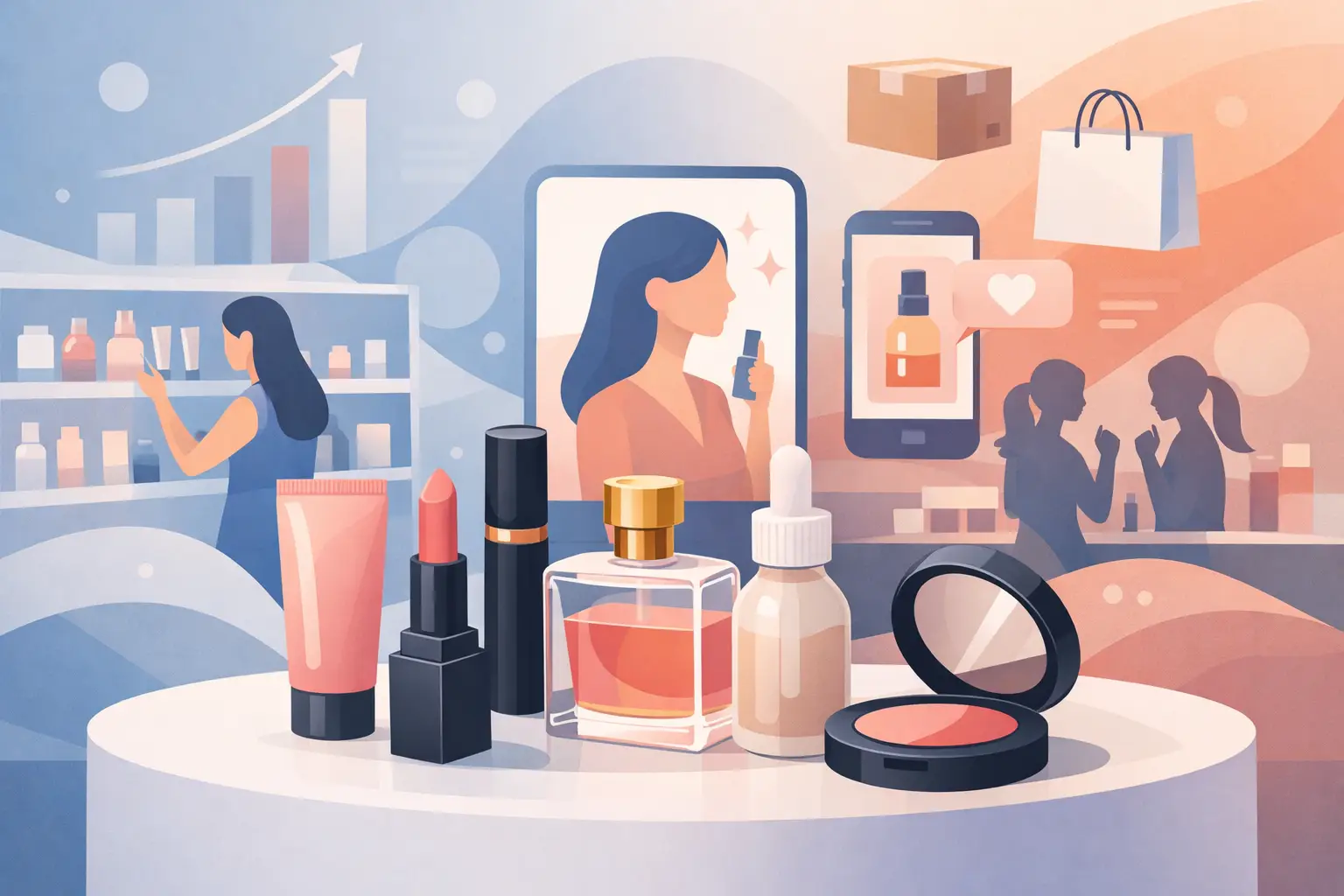
Beauty buyers heading into next year are facing a sharper market than usual. Demand is still there, but it is more fragmented, more price-aware, and more influenced by fast-moving digital signals than traditional category planning. That is exactly why beauty retail trends 2026 matter for retailers, distributors, and e-commerce operators who need assortments that move quickly without adding inventory risk.
For wholesale buyers, the real question is not which trends look exciting on social media. It is which ones can translate into repeat sales, strong margins, and reliable replenishment. The retailers that win in 2026 will not simply chase novelty. They will build balanced assortments around proven demand, selective innovation, and supply partners that can support fast adjustments when the market shifts.
Beauty retail trends 2026 will reward disciplined assortment building
The beauty market is not moving toward one dominant consumer profile. It is splitting into several demand lanes at once. On one side, shoppers still want affordable daily-use products and recognizable essentials. On the other, they are willing to spend on premium fragrance, treatment-led skincare, and products with visible performance claims.
That creates both opportunity and pressure for retail buyers. A broader assortment can capture more demand, but too much range creates slow-moving stock and margin drag. In 2026, the strongest retail strategy will be selective breadth. That means offering enough variety to stay relevant without turning the shelf or site into a cluttered catalog.
This is where wholesale planning becomes a growth lever. Retailers need partners that understand which categories deserve depth, which need trend-driven testing, and which should remain tightly edited. A reliable beauty distributor does more than ship cases. It helps retailers make smarter inventory decisions with commercial upside.
1. Fragrance keeps gaining strategic importance
Fragrance is no longer just a prestige add-on. It is becoming one of the most commercially powerful categories across physical retail and online beauty. Consumers are buying fragrance for self-expression, gifting, layering, and even daily mood shifts. That broader use case is expanding the category beyond traditional luxury counters.
For retailers, this means fragrance should be treated as a core revenue driver, not a side category. Premium perfumes still attract high-intent shoppers, but there is also growing room for accessible luxury, discovery sets, and gift-friendly formats. The trade-off is that fragrance inventory requires careful brand and price positioning. Too much sameness weakens differentiation. Too much experimentation can create dead stock.
Retailers that perform well here will balance iconic sellers with selective newer lines that fit their customer profile. Strong supply consistency matters even more in fragrance, where missing a top seller can quickly push customers elsewhere.
2. Skincare shoppers want results, not complexity
Skincare demand remains strong, but the market is correcting away from oversized routines. Consumers are still interested in active ingredients and visible skin benefits, yet many are becoming more selective about how many products they buy and use. They want clear value, understandable claims, and products that justify shelf space in their bathroom.
That shift favors retailers who stock concise, benefit-led skincare assortments. Products positioned around hydration, barrier support, brightening, texture improvement, and age-supportive care will continue to perform, especially when messaging is easy to understand. Complicated storytelling without obvious benefit is becoming harder to convert.
For wholesale buyers, this creates a practical opportunity. Instead of overloading on niche variations, it makes more sense to build around high-rotation skincare basics with targeted premium upgrades. The category still rewards innovation, but only when innovation is easy for shoppers to grasp and easy for staff or online content to explain.
3. Hybrid beauty is becoming standard retail logic
The line between cosmetics, skincare, and personal care keeps getting thinner. Tinted skincare, treatment-infused makeup, and body care with facial-grade positioning are all part of the same shift. Consumers increasingly expect products to do more than one job.
This does not mean every hybrid product will sell. Some will resonate because they solve a real convenience need. Others will create confusion if the benefit feels diluted. Buyers should be careful not to assume multifunctional automatically means higher demand.
The stronger play is to identify hybrid products that reduce decision friction. A complexion product with skincare benefits can work well because the value is immediate. A body product with elevated ingredients can also perform when presented as an affordable premium upgrade. In beauty retail trends 2026, hybrid categories will reward clear positioning and punish vague promises.
4. Price architecture will matter more than trend appeal
Retailers are entering a period where price strategy cannot be separated from assortment strategy. Consumers are still buying premium beauty, but they are making more deliberate decisions. Many are trading up in one category and trading down in another. A shopper may spend on fragrance while looking for accessible skincare staples or value-driven cosmetics.
That means retailers need stronger price architecture across their assortment. The goal is not to compete only on low price. It is to create a mix that gives customers logical entry points, trade-up options, and confidence that they can buy across categories without feeling overextended.
For B2B buyers, this is where wholesale sourcing becomes highly commercial. Competitive pricing on proven inventory gives retailers room to protect margin while staying attractive at shelf level. Premium positioning still has value, but it has to be supported by smart range planning. Retailers that ignore mid-tier demand may lose volume. Retailers that abandon premium altogether may lose differentiation.
5. Fast-moving trend cycles require tighter inventory control
Beauty trends now move from niche conversation to mass demand at unusual speed. A viral ingredient, format, or aesthetic can generate rapid interest, but not every surge turns into sustained sell-through. That creates one of the biggest inventory risks in the category.
Retailers need to be faster, but not reckless. The right approach is test-and-scale buying. Start with commercially sensible quantities, watch sell-through closely, and expand only when demand holds. This model reduces exposure while still letting retailers capitalize on trend momentum.
The supply side matters here just as much as merchandising. A retailer can only act quickly if the distributor can replenish consistently and communicate availability clearly. Dependable supply is no longer just an operational advantage. It is part of trend execution.
For that reason, many buyers will place more value on wholesale partners that combine trend awareness with inventory reliability. Glamour TEK AG operates in that space by helping retailers source premium, trend-relevant beauty products with the consistency needed to support business growth.
6. Personal care is moving closer to premium beauty
One of the more commercially interesting shifts in 2026 is the continued elevation of personal care. Categories like body mist, deodorant, hand care, bath, and body treatments are being purchased with a beauty mindset rather than a basic household mindset. Packaging, fragrance profile, texture, and perceived indulgence all matter more than they did a few years ago.
This creates room for retailers to expand basket size with products that feel aspirational but remain accessible. Personal care can also be a useful bridge category. It brings in frequent purchases while supporting fragrance and skincare sales through scent families, routines, and self-care positioning.
The opportunity depends on customer base. In some stores, premium personal care will become a strong repeat category. In others, it will work better as a supporting assortment rather than a major investment. Buyers should watch turnover carefully and avoid forcing a premium concept where their customer is still shopping mostly on utility.
7. Trust and supply reliability will become competitive differentiators
Retail buyers have always cared about dependable fulfillment, but in 2026 this becomes more central to growth strategy. Consumers expect availability. Retailers need consistent stock flow to maintain sales, manage promotions, and protect customer loyalty. Supplier inconsistency now creates a more immediate revenue problem because shoppers have so many alternatives.
This is especially true in beauty, where repeat purchases and replenishment cycles are critical. If a hero perfume, skincare item, or everyday cosmetic disappears too often, customers may not wait. They simply switch channels or brands.
That is why the best-performing retailers will look beyond product alone when they evaluate suppliers. Trend relevance matters. Product quality matters. Competitive wholesale pricing matters. But none of those advantages reach full value without operational dependability behind them.
What buyers should do now
The market is offering growth, but not for passive assortment planning. Buyers should review which categories truly drive repeat demand, where premium can lift margin, and where trend exposure should remain controlled. They should also evaluate whether their supplier network is helping them react faster or slowing them down.
The smartest move is not to bet everything on one headline trend. It is to build an assortment strategy with range discipline, price balance, and reliable replenishment at the center. Beauty retail in 2026 will reward retailers who combine trend awareness with commercial control.
That is the real opportunity ahead – not just to stock what is new, but to build a beauty business that sells with more confidence, more consistency, and better long-term upside.