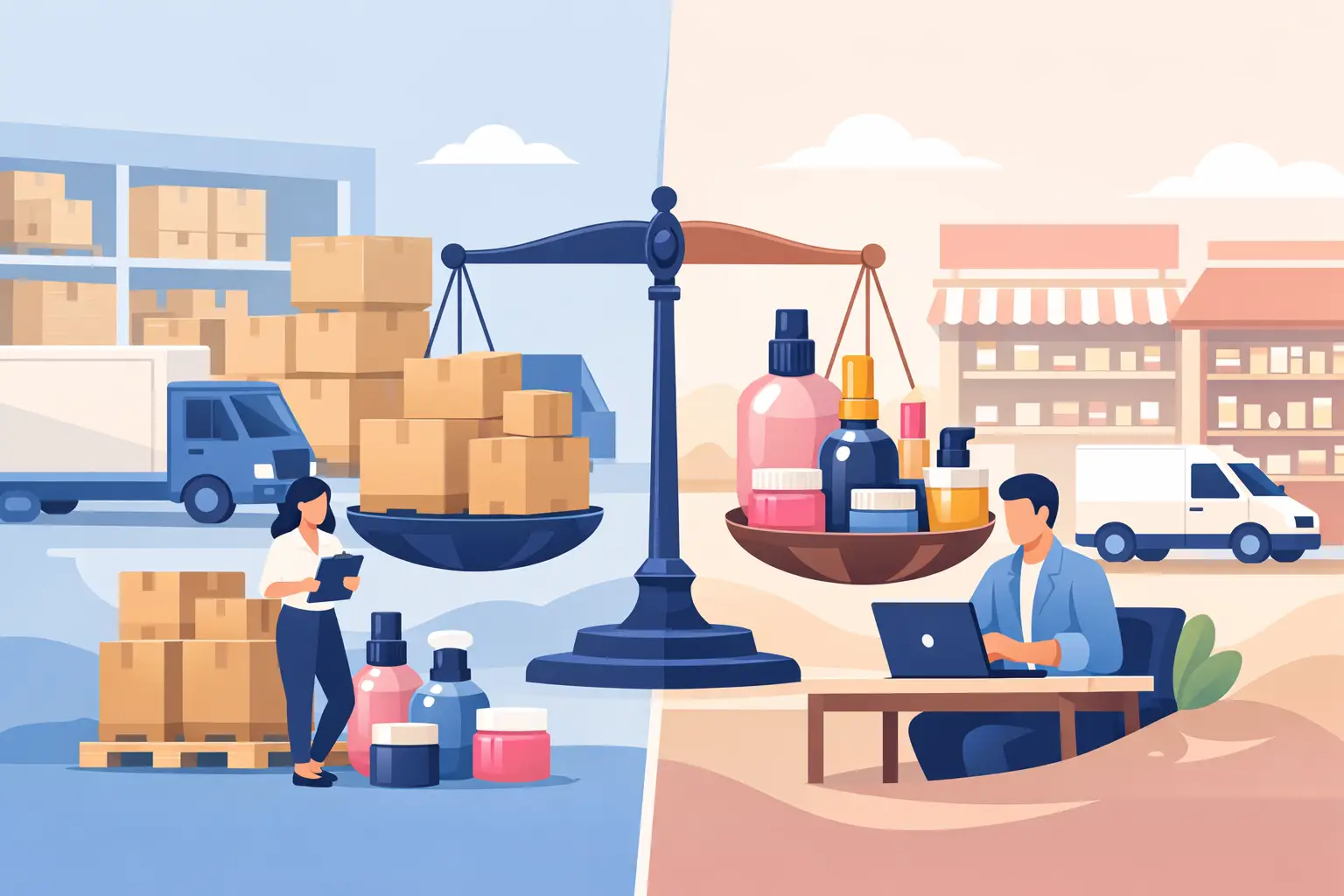
A fragrance bestseller that arrives two weeks late can cost more than a missed sale. It can send a repeat customer to a competitor, leave promotional displays incomplete, and force a retailer to discount slower inventory to free up cash. That is why the beauty wholesaler versus distributor decision is not simply a question of where to buy products. It shapes assortment strength, margins, replenishment speed, and the confidence behind every purchase order.
For beauty retailers, e-commerce sellers, and procurement teams, both partners can be valuable. The right choice depends on the brands you need, the volume you can commit to, the markets you serve, and how much supply-chain support your business requires.
Beauty Wholesaler Versus Distributor: The Core Difference
A beauty wholesaler buys products in volume and resells them to business customers. Wholesalers typically carry a broad selection of perfumes, cosmetics, skincare, personal care, and trend-led products from multiple brands. Their role is centered on giving retailers access to commercially viable inventory at wholesale pricing.
A beauty distributor generally has a more formal relationship with one or more brands. A distributor may be appointed to represent a brand in a specific country, region, or channel, handling market entry, sales development, local warehousing, marketing coordination, and sometimes retailer onboarding. In many cases, the distributor is the authorized route to that brand within the territory.
The distinction matters, but it is not always absolute. Some businesses operate as both wholesaler and distributor. A distributor may also sell a multi-brand catalog, while a wholesaler may offer products sourced through authorized distribution networks. Instead of relying on labels alone, retailers should evaluate the actual commercial offer: product authenticity, stock availability, pricing structure, territory rights, delivery performance, and account support.
What a Beauty Wholesaler Brings to Retailers
A wholesaler is often the practical choice for retailers building or refreshing a multi-brand assortment. Rather than opening separate accounts with numerous manufacturers, a buyer can consolidate purchases across categories. This can reduce administrative work and make it easier to test products without committing to a large, brand-specific program.
For a beauty business, that flexibility has real value. A retailer may need established fragrance names for dependable traffic, everyday cosmetics for repeat purchases, and trend-driven items that create newness on the shelf or online. A well-curated wholesaler can support all three needs through one buying relationship.
Wholesalers can also help retailers respond to demand faster. When a product category gains momentum, the ability to source ready inventory from a dependable wholesale partner can be more useful than waiting for a new direct brand account to be approved. This is particularly relevant for independent stores, online sellers, and growing retail chains that need to keep their assortment current without adding unnecessary sourcing complexity.
Pricing is another major consideration. Because wholesalers purchase at scale, they may offer competitive pricing across a wide portfolio. Retailers should still look beyond the unit cost. The stronger offer is the one that combines viable margin with consistent supply, sensible minimum order quantities, sellable products, and a clear understanding of the total landed cost.
A wholesale model does have limits. A wholesaler may not provide exclusive territory rights, dedicated local marketing funds, or the same level of brand-development support as an appointed distributor. If your strategy depends on becoming the primary retail partner for one brand in a defined market, a distributor relationship may be the better fit.
What a Beauty Distributor Brings to the Market
Distributors are built to develop brands within specific markets. Their value often goes beyond inventory. They may manage import requirements, product registrations, local labeling expectations, brand education, launch planning, merchandising guidance, and field sales support. For brands expanding internationally, this structure creates a route to market that is more controlled than broad wholesale selling.
For retailers, working with a distributor can mean access to official product launches, detailed brand training, promotional calendars, and clearer information about authorized resale. This can be especially valuable in prestige beauty, regulated personal care categories, or markets where compliance and local operating knowledge carry significant weight.
A distributor may also offer stronger continuity for a particular brand. Because it is accountable for that brand’s growth in a region, it has an incentive to forecast demand, coordinate replenishment, and protect market positioning. Retailers seeking a long-term branded program can benefit from that focus.
The trade-off is that distributor relationships can be more structured. Minimum order commitments may be higher, product selection may be limited to the represented brands, and commercial terms may require a more formal account setup. Retailers can also face channel restrictions or rules around where and how products may be sold. These conditions are not necessarily disadvantages. They simply make more sense for a business ready to invest in a defined brand strategy.
Which Supply Model Fits Your Business?
The best choice depends on what your buying team is trying to achieve in the next quarter and the next year. A new online retailer may prioritize range, speed, and manageable inventory exposure. An established chain may prioritize regional continuity, official launch access, and support for a strategic brand partnership.
Choose a wholesaler when your priority is assortment flexibility. This is often the right route if you need to purchase across multiple beauty categories, test new brands or formats, replenish fast-moving products quickly, or avoid maintaining a large number of supplier accounts. It is also a strong option when your customers expect variety and your merchandising plan changes frequently.
Choose a distributor when your priority is brand depth. If you want to build a meaningful business around a specific brand, require official market support, need guidance on compliant local selling, or value access to coordinated promotions and education, distributor terms may justify the additional commitment.
Many successful retailers use both. They rely on distributors for core brands that anchor their identity, then use wholesalers to broaden their offer, react to trends, and fill gaps in seasonal or high-demand inventory. This blended approach can create a more resilient buying strategy than depending on a single source for every product need.
Questions to Ask Before You Place an Order
A supplier conversation should quickly move past catalog size. A large product list is only useful if the inventory is authentic, available, profitable, and appropriate for your customers. Ask whether the products are in stock now, how often availability is updated, and what replenishment timelines look like for your priority SKUs.
Clarify the commercial terms early. Confirm minimum order values, payment conditions, case-pack requirements, shipping responsibilities, and whether pricing changes with order volume. For fragrances and cosmetics, shelf life and batch handling should also be part of the discussion. A low purchase price loses its appeal if the stock has limited selling time remaining.
Retailers should also understand resale expectations. Are there territory restrictions? Are marketplace sales permitted? Does the supplier provide invoices and documentation that support your selling channels? These questions matter for every business, but they are especially important for e-commerce sellers operating across state lines or serving international customers.
Finally, assess the supplier as an operating partner. Do they communicate clearly when stock changes? Can they recommend commercially relevant products instead of simply moving excess inventory? Do they understand what makes a beauty item sell through in your channel? Reliable supply is not only about delivery. It is about accurate information that allows buyers to plan with confidence.
Build an Assortment That Can Perform
The strongest beauty assortment is rarely built around the lowest-cost supplier or the largest catalog. It is built around products your customers recognize, discover, repurchase, and recommend. Your sourcing model should make that possible without tying up too much capital in slow-moving stock.
Start with the role each product plays in your assortment. Core products generate dependable demand. Premium fragrances and giftable sets can raise basket value. Trend-driven cosmetics create urgency and give customers a reason to return. A capable wholesale partner helps you balance those roles while protecting margin and availability.
For retailers seeking multi-brand beauty inventory with a premium, market-aware focus, Glamour TEK AG supports that balance through dependable wholesale supply designed for international retail growth. The goal is not simply to fill shelves. It is to give your business inventory confidence when demand shifts and customers expect something new.
The right supplier model should make your next buying decision clearer, not more complicated. Select the partner that gives you the products, terms, and supply reliability needed to keep your beauty business relevant and ready to sell.