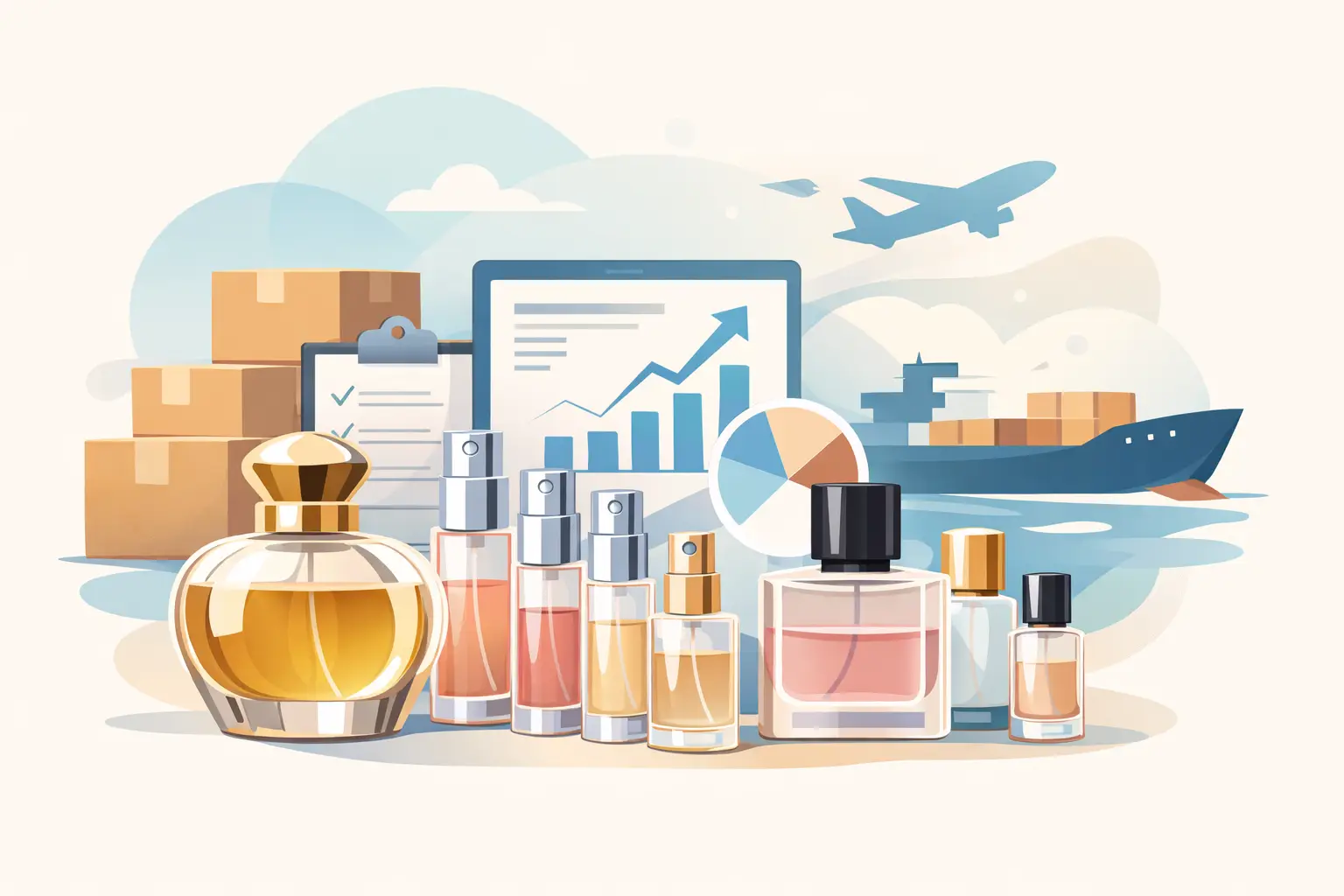
A 10ml fragrance can be an easy first purchase for a customer who would never commit to a full-size bottle. That lower entry price creates opportunity, but it also creates operational risk: one questionable supplier, leaking atomizer, or inconsistent scent can damage a new store quickly. The phrase kinh nghiệm nhập sỉ nước hoa chiết 10ml – 50ml cho người mới kinh doanh online reflects a practical sourcing challenge: building an attractive fragrance assortment without tying up capital in inventory that does not move.
For online sellers, success is not about buying the lowest-priced decants available. It is about securing authentic, marketable inventory, calculating margin after every fulfillment cost, and creating a repeatable supply process that can grow with demand.
Start with a focused 10ml-50ml assortment
New fragrance retailers often make the same expensive mistake: they launch with too many scents, too many formats, and no clear customer profile. A broad catalog may look impressive, but it spreads your budget across slow-moving stock and makes replenishment harder to manage.
Start with a deliberate mix of recognizable fragrance families and price points. A 10ml format is usually well suited to discovery purchases, travel use, gifting, and customers testing a premium scent before purchasing a larger size. A 30ml or 50ml format can serve repeat buyers who want better value per milliliter without committing to a full bottle.
Your opening assortment should balance commercial familiarity with selective trend relevance. Include established profiles that customers understand, such as fresh citrus, clean musk, warm vanilla, floral, woody, and amber scents. Then add a smaller number of trend-led options based on demand in your market. A retailer targeting young, social-commerce-driven buyers may see strong interest in gourmand and sweet fragrance profiles. A more premium customer base may respond better to refined woody, iris, leather, or niche-inspired selections.
Do not assume that a popular fragrance is automatically profitable. Its sell-through depends on your audience, your selling price, your content quality, and how easily competitors can undercut you.
Verify the wholesale source before comparing prices
In fragrance wholesale, an unusually low price is not a competitive advantage if authenticity, origin, or replenishment cannot be verified. The supplier relationship should give your business confidence, not create constant uncertainty.
Ask clear questions before placing a meaningful order. Can the supplier provide product origin information, batch or lot references where applicable, invoices, and a consistent description of product condition? Are products factory-sealed, tester units, overstock, or decanted from larger bottles? Is the supplier authorized to distribute the brands offered, or are products sourced through secondary channels? The answer affects both your risk profile and the claims you can make to customers.
For pre-decanted inventory, inspect the quality of the actual presentation, not only the fragrance itself. Confirm the bottle material, atomizer performance, cap fit, label durability, fill level, and outer packaging. A 10ml product that leaks in transit can erase margin through refunds and replacements. Order samples from more than one supplier if necessary, then test them under normal shipping and storage conditions.
Reliable supply matters as much as the first shipment. If a best-selling scent cannot be replenished for months, paid advertising and customer acquisition become harder to justify. Choose wholesale partners that can communicate stock availability, minimum order quantities, lead times, and pricing terms with consistency. This is where a strategic B2B supplier relationship delivers a real advantage over opportunistic buying.
Know the compliance line before you decant or relabel
Selling fragrance online involves more than selecting attractive scents. Alcohol-based perfumes are commonly regulated for transportation because they are flammable, and product labeling requirements can vary by market, product format, and sales channel.
If you purchase finished, properly labeled decants from a supplier, request documentation and make sure the product information is accurate for your intended market. If you plan to decant fragrance yourself from full-size bottles, take extra care. You need a controlled process for sanitation, accurate volume filling, batch tracking, storage, labeling, and customer disclosures. You also need to understand the trademark and resale implications of using branded names, logos, or packaging in your listings.
Do not present a self-decanted product as brand-manufactured if it is not. Clear, truthful descriptions protect customer trust and reduce avoidable disputes. Before launching, consult qualified legal and compliance professionals familiar with the jurisdictions where you operate, especially if you sell across state lines or internationally.
Shipping also deserves planning from day one. Confirm carrier restrictions, packaging requirements, and service options for alcohol-based fragrance. A low-cost shipping method is not useful if it creates damaged orders, delayed deliveries, or rejected parcels.
Price from your landed cost, not the invoice price
A wholesale invoice tells only part of the story. Your real unit cost includes product cost, inbound freight, duties or taxes where applicable, payment processing, packaging, fulfillment labor, damaged-unit allowance, marketplace fees, advertising, and customer service.
For example, a 10ml decant purchased at $9 may look like it supports an attractive retail price. But if freight adds $0.70, packaging adds $1.10, payment and marketplace fees take $1.80, and you reserve $0.40 for leakage or replacement claims, the economics look very different. Price decisions should be made from this fully loaded number.
Set a target gross margin that gives your business room to acquire customers and handle occasional problems. The right target depends on whether you sell through your own website, a marketplace, a physical store, or a mix of channels. Marketplaces can deliver reach but often take more in fees and push sellers into direct price competition. A direct store gives you greater control over bundles, education, and customer retention, but requires stronger marketing execution.
Avoid training customers to wait for constant discounts. Instead, create value through discovery sets, complementary scent bundles, shipping thresholds, and thoughtful product guidance. A three-scent 10ml set can raise average order value while helping customers explore without feeling pressured into a single expensive choice.
Build listings that answer the buyer’s real questions
Fragrance is difficult to sell online because customers cannot smell the product through a screen. Generic phrases such as “luxurious scent” or “long-lasting fragrance” do little to convert a cautious buyer.
Describe the scent in concrete, customer-friendly terms. Explain the fragrance family, key note impressions, likely mood, and ideal use occasion. Is it bright and office-friendly, warm and evening-focused, clean after a shower, or sweet enough for a night out? Avoid treating notes as a guarantee. Fragrance wears differently based on skin chemistry, climate, and personal perception.
Your product page should also state the volume, bottle type, condition, approximate spray count if you choose to provide it, and whether the item is a manufacturer-produced travel format or a retailer-decanted product. Use original, clear product photography that shows scale. A customer disappointed by the perceived size of a 10ml bottle may leave a negative review even if the fragrance itself is excellent.
Customer reviews become especially valuable in this category. Encourage buyers to describe what they liked, when they wore the scent, and whether they would purchase a larger size. Those details help future shoppers make decisions and reveal which products deserve deeper inventory investment.
Manage inventory by sell-through, not excitement
The smartest first order is rarely the largest one. Use smaller opening quantities to validate demand, then reorder based on sales velocity, not personal preference or social-media hype.
Track each SKU by units sold, gross margin, return or complaint rate, days in stock, and replenishment lead time. A scent with modest sales but excellent margin and low returns may deserve a place in the assortment. A viral product with thin margin, high leakage complaints, and unreliable availability may not.
Create reorder points before stock becomes urgent. If a supplier needs three weeks to deliver and a product sells ten units per week, waiting until the final few units are gone creates a preventable sales gap. At the same time, do not overbuy fragrance simply to achieve a better unit price. The discount must outweigh the cost of tied-up cash, storage, and the chance that demand shifts.
Turn first-time buyers into repeat fragrance customers
The advantage of 10ml-50ml fragrance is that it can support a natural purchase journey. A customer may begin with a 10ml discovery purchase, return for a different scent seasonally, then buy a larger format of a proven favorite. Your merchandising should make that progression easy.
Organize products by scent family, occasion, season, and intensity. Offer helpful pairing recommendations, but keep them commercially relevant. Someone buying a fresh daytime scent may also be interested in a warmer evening option. Someone purchasing a gift may value a ready-made set more than another single bottle.
Reliable wholesale sourcing gives you the foundation to make these promises with confidence. Glamour TEK AG supports retailers by prioritizing quality, trend-aware beauty inventory, and dependable supply conditions that help businesses build assortments designed for sustained sell-through.
Start small enough to learn quickly, but source seriously enough to protect your reputation. When every product is authentic, clearly presented, correctly priced, and replenishable, a modest fragrance range can become a credible profit center for your online beauty business.